

Steps
1
Open the generator
Click Create in the top navigation to open the image generator. On mobile, tap Create in the bottom navigation. You can also start from a style reference or a studio. If your home still shows Create an image, click that instead — you’re on the previous home.
2
Write your prompt
Keep your prompt short and clear. Focus on the main subject or scene you want to generate.
3
Add a model (optional)
To include a specific product or subject, type its model name (for example, 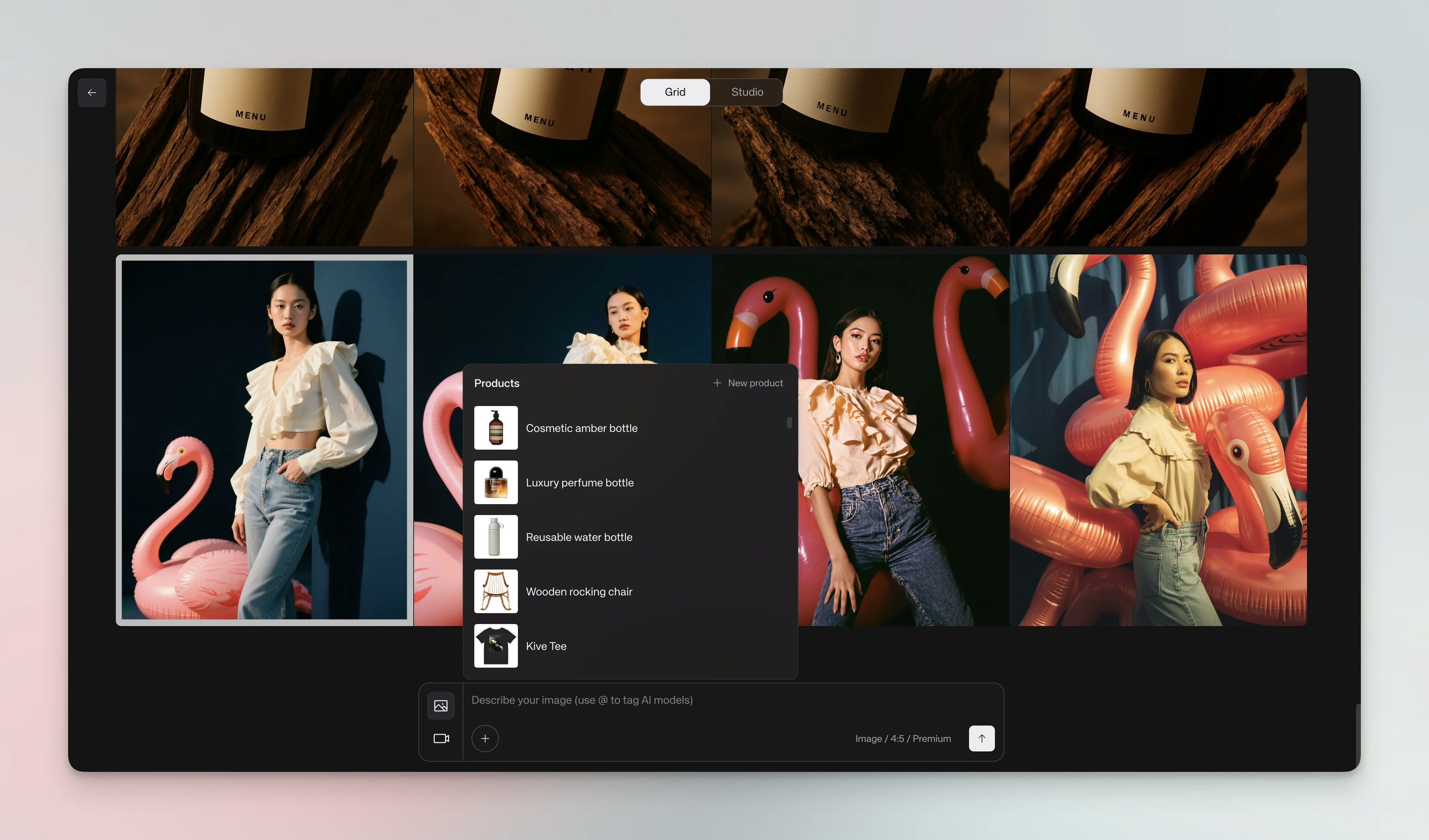
@product1) in your prompt.4
Choose a studio (optional)
Pick a studio preset for easy prompting.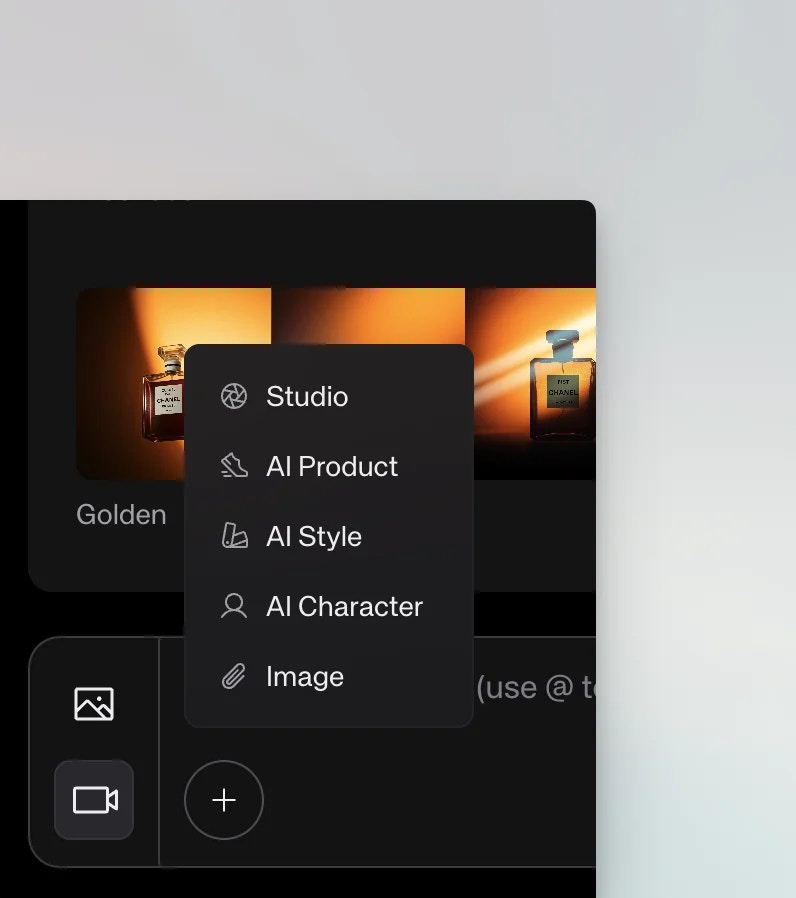
5
Set aspect ratio, versions, and quality
The generation bar shows all settings in a single row below the prompt: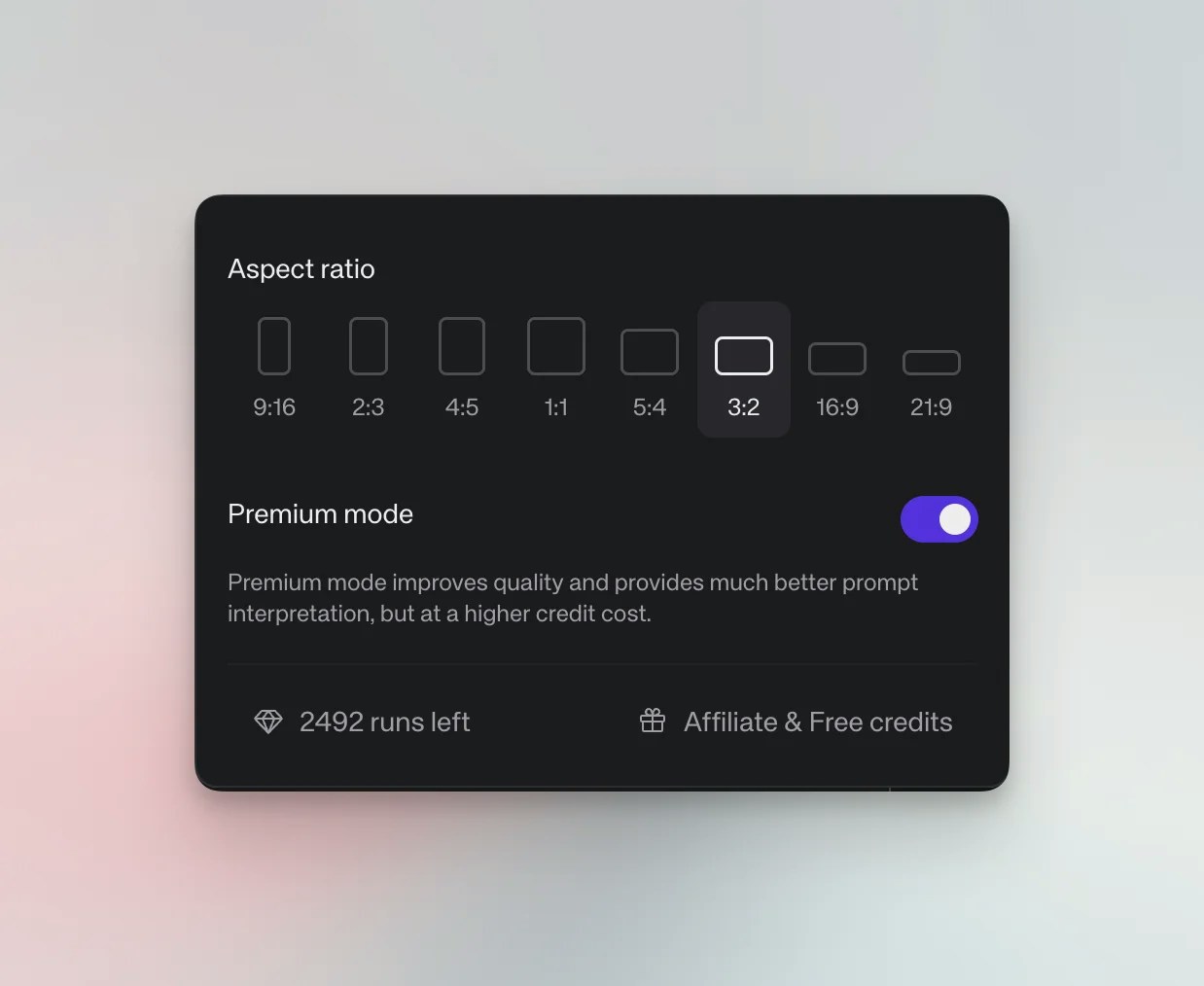
- IMAGE / VIDEO dropdown — switches between image and video generation (see Generate a video)
- + button — add a Product, Studio or Character model (plus Style in workspaces that still have style models), attach an Image or, once your workspace has saved ones, Attachments; add Ideas once you’ve bookmarked some; open Video Presets or Saved prompts (shown once you have saved a prompt), or start a Bulk generation. Bulk is available in image mode on paid plans, on desktop.
- Aspect ratio — click to choose from 9:16, 2:3, 3:4, 4:5, 1:1, 5:4, 4:3, 3:2, 16:9, or 21:9
- Versions — choose how many variations to generate: 1, 2, or 4 images
- Quality — balance credits and output:
- Draft — fast and affordable, ideal for testing ideas
- Premium — the go-to for most professional work
- Max — unrivaled power for flagship content
- Dictate prompt (microphone) — speak your prompt instead of typing it
6
Generate
Click the arrow button (↑) to render the image. Save favorites to boards or download to your device.
7
Save to workspace (for collaboration)
Generated images first appear in your personal My generations feed (under Private in the Organize sidebar), visible only to you. To share with workspace members, save the image to your library or a board by clicking the Save button on the image.
Options
Image reference: Right‑click an image and choose Attach as reference, or click Attach as reference in the item detail view. This opens the image generator with the image attached to your prompt. Models: Type@modelname to reference trained subjects. For multi-product shots, combine multiple product models with commas: @product1, @product2.
Reuse prompts: Open a generated image and click Use prompt to copy the prompt back into the text bar.
Download: From an image, use the download option to save it to your device.
Credits
Generations consume credits whether or not you save them to a board. If a generation fails to produce any output (for example due to a technical error or moderation block), your credits are automatically refunded. If a generation completes but isn’t what you wanted, click the thumbs-down button on it — on your own generations made on the Create page (not in an Agent chat) it reads Diagnose & Fix. The Agent works out the likely cause, refunds that output’s credits up to a monthly limit, and offers to regenerate with the fix. See Diagnose and fix a generation. Some variation between generations is still normal with AI.Tips
Tip: Start with studios for best results — they handle lighting and composition so you can focus on the subject. Tip: Keep prompts short and clear; avoid extra details that fight the studio preset. Tip: Save successful prompts and models to boards so you can reuse them later. Tip: Kive understands prompts in multiple languages including English, Spanish, French, Portuguese, German, and more, though we recommend English for best results.Delete images
Saved images: Delete from your Library or Boards by selecting the image and clicking Delete. Unsaved generations: You can delete a row of generations by clicking the trash icon on the right side of the row. Individual unsaved generations cannot currently be deleted from the My generations feed.Some deletion options may not be available on mobile.